
Eddy County ASU Release Status
Eddy County identifies an Alternative Sentencing Unit and an Artesia detention sub-office. Alternative sentencing changes the place or manner in which a court order is carried out. It does not automatically end the sentence, case, or all controls. Someone may leave ECDC’s secure building and enter an ASU-administered setting while remaining subject to a schedule, monitoring, reporting, treatment, or other terms found in the actual order. Research did not establish one standard set of ASU conditions, so no particular condition should be assigned without the case record.
The key distinction is between physical location and legal status. ECDC can close or change its secure-custody episode, yet the court’s alternative-sentencing order may remain active. The ASU record can show placement, current unit status, and completion as maintained by the county. The court record can show the order, later modification, violation response, or discharge. A portal entry alone cannot prove that the whole sentence ended.
Verify Eddy County ASU Placement
No separate public ASU inmate roster or historical released-person feed was identified. That absence fits the unit’s function. This is court and community alternative-sentencing administration, not an ordinary jail archive. Verification should begin with the correct criminal case, then move to the unit that administers the order.
- Identify the full name, court case number, sentencing court, and approximate placement date.
- Open the public court summary and locate the sentence, alternative-placement order, or later status event.
- Request the signed order from the filing court when the public summary lacks the terms.
- Call the Alternative Sentencing Unit to confirm which location holds the administrative record and whether a public status can be provided.
- Ask separately whether the record shows placement, active participation, completion, termination, or discharge.
The official New Mexico court public-access portal can help locate a case, but the general public tier does not display all filed documents. The signed order is more useful than a short docket label when the conditions or completion standard matter. Court staff control the official court file. The unit controls its own operational record.
When ECDC data shows ASU as an out-of-facility category, treat it as a movement clue. It suggests that the secure jail setting changed. It does not prove sentence completion, probation discharge, or freedom from all court conditions.
Eddy County ASU Contacts
Official county pages present two location descriptions. The Artesia sub-office page places the office on the second floor of the Artesia Public Safety Complex at 3300 W. Main. The county directory lists ASU at 201 N. Canyon in Carlsbad. The listings may refer to distinct service points, but the research did not establish which file or function is handled at each site. Call before visiting and state the case, order, and reason for the inquiry.
Eddy County Alternative Sentencing UnitDirectory location: 201 N. Canyon, Carlsbad, NM
Artesia sub-office: second floor, 3300 W. Main, Artesia, NM
Phone: 575-234-1562
Artesia hours: Monday–Thursday, 7:00 a.m.–4:15 p.m.; Friday, 7:00–11:00 a.m.
The county Artesia sub-office page is the best official source for that office’s posted location and hours.
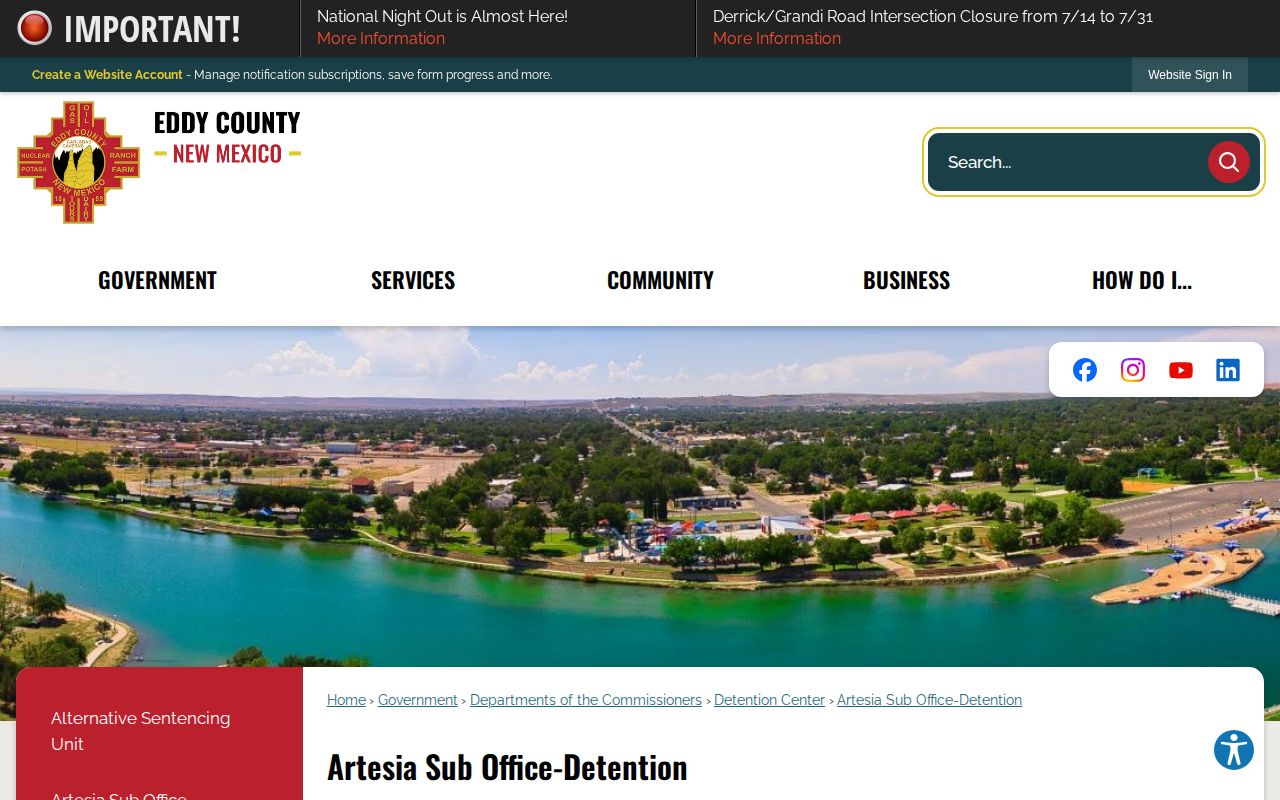
The image supports the Artesia office details, while the county directory remains the source for the separate Carlsbad listing.
Note: Confirm the office before travel because county pages list both Artesia and Carlsbad locations for this unit.
Eddy County ASU Court Orders
The sentencing or release order supplies the legal framework. Depending on the case, it may identify a start date, reporting rule, approved placement, term, review date, or completion condition. Those are examples of fields to look for in the actual order, not a claim that each Eddy County ASU order contains the same terms. If a public case summary uses a short event label, request the filed document from the court that entered it.
| Source | Question it answers |
|---|---|
| Signed court order | What legal authority and stated terms govern the placement? |
| ASU unit record | Was the person placed, active, completed, or otherwise closed by the unit? |
| ECDC booking record | When did secure county jail custody change or end? |
| Court register of actions | Was a later modification, violation, or discharge event entered? |
Eddy County sits in the Fifth Judicial District. District Court in Carlsbad handles felony cases. The Carlsbad and Artesia Magistrate Courts handle misdemeanors and the preliminary stages of felony matters, while municipal ordinance cases may remain in municipal court. Check the case number and court name rather than assuming the nearest courthouse has the order.
A docket date is not always the date a person moved. A judge may sign an order before ECDC processes the change, or the unit may record intake after the court event. Preserve both dates and label their source.
Eddy County ASU Completion
Completion should be stated only when a unit or court record supports it. “Out of ECDC,” “placed with ASU,” “inactive,” and “discharged” are not interchangeable. Placement marks entry into an alternate setting. Active status means the order is still being administered. Completion may mean the assigned part of the program was fulfilled. A final discharge or case closure depends on what the court or responsible authority ordered.
- Alternative sentencing
- A court-authorized way to carry out custody or sentence terms outside a conventional jail setting.
- Placement
- The person’s entry into the unit or program named by an order.
- Completion
- A documented end to the assigned unit requirement, subject to the scope of the order.
- Discharge
- A formal end to the identified sentence or supervision status.
Probation is also distinct. A court can impose probation, and NMCD officers supervise many cases, but ASU placement alone does not prove probation. Parole follows a state prison term and is governed through NMCD and the Parole Board. Pretrial conditions precede final adjudication. Use the exact order and agency name to avoid assigning the wrong type of supervision.
The Eddy County release-record search path explains how to reconcile jail, court, and receiving-system records when more than one custody episode appears.
Request Eddy County ASU Records
A focused request should identify the person, aliases, birth date if known, court case number, approximate placement dates, and the court that issued the order. Ask for records sufficient to show the placement date, responsible unit, status dates, completion or termination notation, and the source authority for any status change. Do not ask the custodian to perform open-ended research or decide what a court order means.
Use the Eddy County NextRequest portal for county-created records when directed by the unit. The form accepts a narrative and optional date-range and case-number fields. It records web, email, mail, telephone, in-person, and fax as submission methods. A narrow date range and exact case number help separate ASU administration from a prior ECDC booking.
Request court documents from the filing court. New Mexico Case Lookup can identify the public summary, but it is not the official file and does not show general-public document images. The court’s IPRA route applies to judicial records, while the county route applies to county records. One custodian should not be asked to correct another custodian’s system.
New Mexico’s Inspection of Public Records Act starts with access to public records unless an exemption applies. Juvenile, sealed, expunged, medical, security-sensitive, and other confidential material can be limited. An expungement can remove booking, photo, court, corrections, and discharge information from general public access. A missing result therefore needs careful phrasing.
ASU Is Not a Jail
A conventional jail portal is organized around bookings, cells, custody dates, and releases. Eddy County ASU is organized around alternative-sentencing administration. Searching it as if it were a jail can produce two errors. First, a person may appear gone even though the court order remains active. Second, the lack of a public roster may be mistaken for lack of any record. The correct sources are the court order and the unit record.
The county court-access screenshot below reinforces the role of the judicial record in this facility-specific verification path. The source is the official public-access portal.
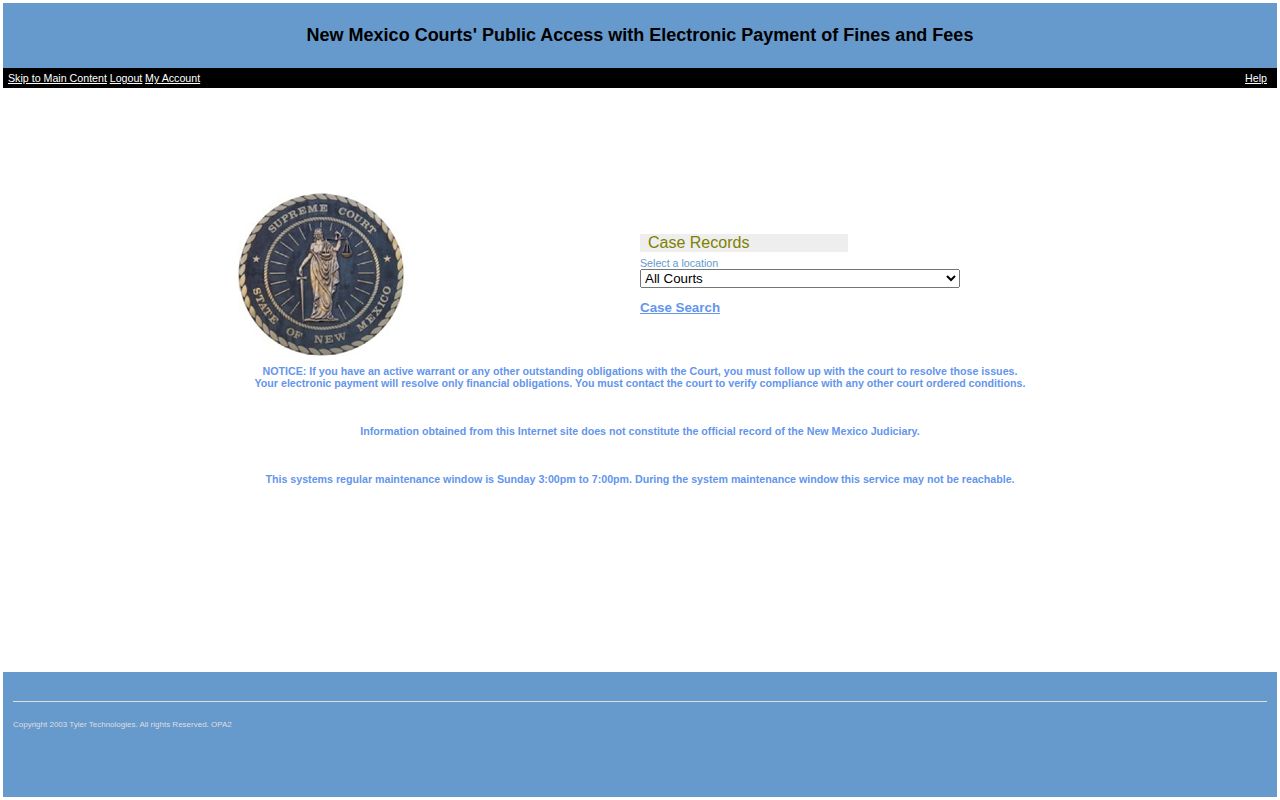
The portal helps identify the case and events, while the signed order and ASU record establish the controlling details.
No annual placement count, capacity, release schedule, public roster cadence, or separate archive was established in the reviewed official sources. Those facts should not be filled with figures from ECDC or another county program. Call the unit, identify the correct office, and request the source record.
Note: A court-order change and a unit-status change may occur on different dates, so preserve the source of each date.